Bedroom Furniture Guide: What You Need and Where It Goes (2026)
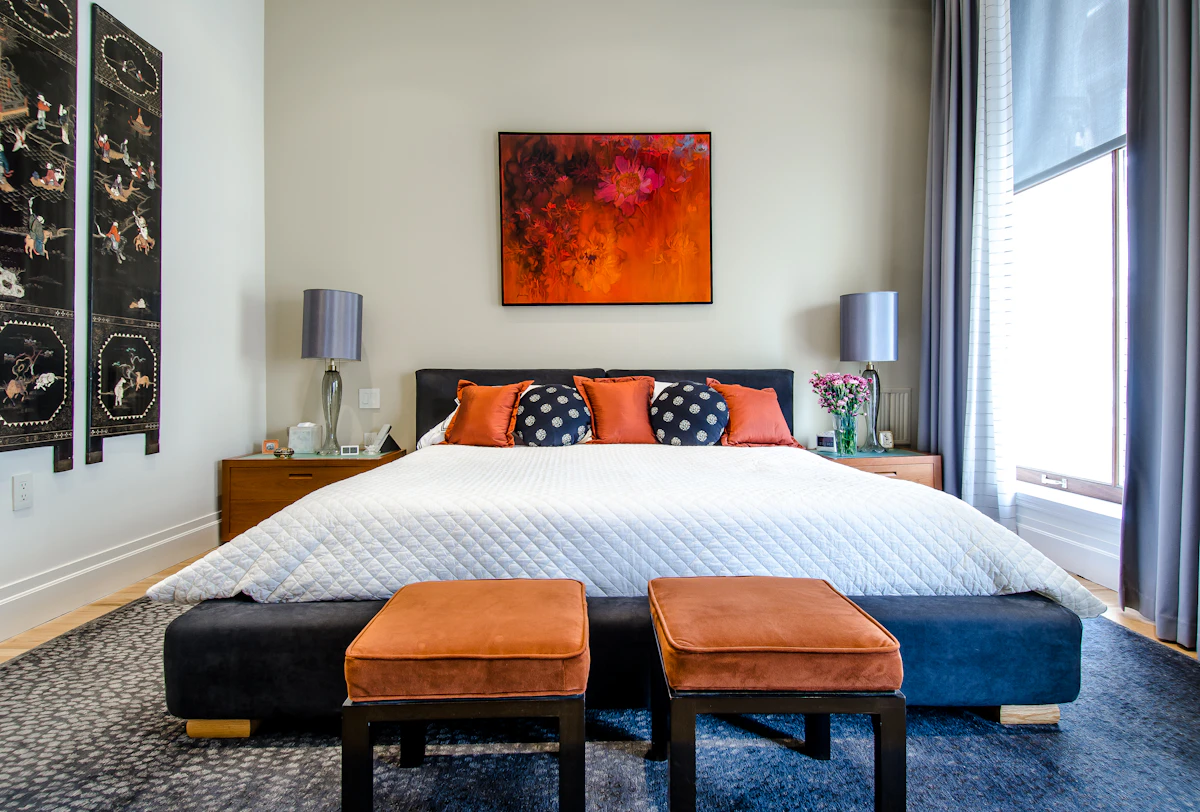
Quick answer: A bedroom needs a bed, storage for clothes, and a bedside table for each sleeper. Buy the bed and mattress first, then the wardrobe, then the bedside tables. Measure the room and leave at least 60 cm beside the bed and 90 cm at the foot.
At a glance
- A bedroom needs a bed, storage for clothes, and a bedside table for each sleeper. Buy the bed and mattress first, then the wardrobe, then the bedside tables. Measure the room and leave at least 60 cm beside the bed and 9
- Measurements are given in imperial and metric throughout this guide.
- Check the measurements table and the 5 mistakes to avoid before you buy anything.
Furnishing a bedroom is mostly about three things: a bed you sleep well in, storage that hides your clothes, and surfaces within reach. Everything else is optional. This guide covers the essential pieces, their sizes, and where they go, so you can furnish a bedroom in the right order without wasting money on pieces that do not fit.
The bed and mattress come first
Spend most of your bedroom budget on the bed and the mattress, because you spend a third of your life in them. A double bed is 135 by 190 cm; a king is 150 by 200 cm; a super king is 180 by 200 cm. Choose the smallest bed that is comfortable for the people who sleep in it, because the extra floor space matters. Try the mattress in a shop if you can, lying on it for at least ten minutes in your usual sleeping position. A good mattress supports your spine without being hard, and a good bed frame is solid, quiet and the right height, usually 55 to 65 cm to the top of the mattress. Our bed size calculator compares every standard size.
Compare sizes with the bed size calculator.
Wardrobes and clothes storage
A wardrobe should hold your clothes with room to spare, because a wardrobe that is too full is hard to use and makes clothes crease. Allow at least 60 cm of depth for hanging clothes, and 100 cm of hanging height for most clothes, 140 cm for long dresses and coats. A wardrobe with a mix of hanging space, shelves and drawers works better than one with only hanging space. If the room has no built-in wardrobe, a freestanding wardrobe with doors is better than an open rail, because it hides clutter and protects clothes from dust. Use the top of the wardrobe for out-of-season storage, and keep the floor in front of it clear so the doors can open fully.
Chest of drawers and dressers
A chest of drawers suits folded clothes, underwear and accessories, and it doubles as a surface for a lamp, a mirror or art. A standard chest is about 80 to 120 cm wide and 45 to 50 cm deep. Place it against a wall where the drawers can open fully, and leave at least 90 cm in front of it. A dresser with a mirror above it works as a dressing table, but it needs good light, so place it near a window or add a lamp. Avoid a chest that is too tall for the room, because it will dominate the wall and make the room feel smaller. A low, wide chest is usually better than a tall, narrow one.
Bedside tables: size and placement
Every sleeper needs a bedside table, and it should be about the same height as the mattress, usually 60 to 70 cm, so you can reach it without sitting up. A table 40 to 50 cm wide is enough for a lamp, a book and a glass of water. A drawer or a shelf keeps clutter out of sight, and a table with a drawer is better than an open shelf. If the room is small, a wall-mounted shelf or a floating bedside table frees the floor and makes the room feel larger. Keep the surface to a few objects, and put the phone charger where it is easy to reach without knocking the lamp over.
Seating and dressing areas
A bedroom does not need a chair, but a small chair or a bench is useful for dressing and for reading. A bench at the foot of the bed holds clothes and gives you somewhere to sit to put on shoes. A chair in a corner with a small table and a lamp creates a reading spot. A dressing table needs a mirror, good light and a stool that tucks underneath, and it works best near a window. Avoid filling the bedroom with seating, because the bed is the main seat in the room, and extra chairs often become places where clothes are piled.
Furniture placement and walkways
Leave at least 60 cm (24 inches) on each side of the bed, 90 cm at the foot, and 90 cm in front of a wardrobe or a chest of drawers so doors and drawers can open. Keep the path from the door to the bed clear, and do not place furniture where it blocks a window or a radiator. In a small room, place the largest pieces against the longest walls and keep the centre of the room clear. Draw the room to scale before buying, and mark the swing of every door and drawer, because a chest that cannot open is useless furniture.
What to buy first
Furnish a bedroom in this order: bed and mattress, wardrobe, bedside tables, chest of drawers, and then seating and decoration. Buy the bed first because it determines the size of everything else, and buy the wardrobe second because it determines how much storage you have. Do not buy a matching bedroom suite unless you have measured the room and know it fits, because suites are designed for large rooms and often overwhelm a small one. Buy pieces you can move and rearrange, and add decoration last, once the furniture is in place and you can see what the room needs.
Furniture mistakes to avoid
The most common mistakes are buying a bed that is too big for the room, buying a matching suite that overwhelms the space, choosing a wardrobe that is too shallow for hanging clothes, and placing furniture where drawers cannot open. Other mistakes are buying a bedside table that is the wrong height, and filling the room with furniture before living in it. Live with the essential pieces for a few weeks before buying more, and notice what you actually miss. The things you reach for are the things worth buying.
Key measurements at a glance
These are the standard measurements used by designers for a room like this. They are the same figures used throughout this guide, collected here so you can check them at a glance while you plan.
| What | Measurement |
|---|---|
| Space beside the bed | At least 60 cm (24 in) each side |
| Bedside table height | Level with the top of the mattress |
| Art above the bed, centre height | 145 cm (57 in) from the floor |
| Wardrobe depth | 60 cm (24 in) for hanging clothes |
| Walkway around the bed | 75 cm (30 in) where possible |
| Curtain drop | To the floor, or 1–2 cm above it |
5 mistakes to avoid
- A bed placed directly under a window, where draughts and light disturb sleep.
- Bedside tables at the wrong height for the mattress.
- Too many small pictures instead of one calm, larger piece.
- Dark, heavy curtains that block morning light completely.
- Open storage full of clutter in a room meant for rest.
Frequently asked questions
What furniture do I need in a bedroom?
A bed and mattress, storage for clothes such as a wardrobe, and a bedside table for each sleeper. A chest of drawers, a mirror and a chair are useful additions, but they are not essential.
What order should I buy bedroom furniture?
Bed and mattress first, then wardrobe, then bedside tables, then a chest of drawers. Buy decoration last, once the furniture is in place.
How much space should I leave beside the bed?
At least 60 cm (24 inches) on each side for getting in and out, and 90 cm at the foot. Leave 90 cm in front of a wardrobe or drawers so doors and drawers can open fully.
What size bedside table should I buy?
About the same height as the mattress, usually 60 to 70 cm, and 40 to 50 cm wide. A drawer or shelf keeps clutter out of sight.
Should I buy a matching bedroom set?
Only if you have measured the room and know it fits. Matching suites suit large rooms, but they often overwhelm a small bedroom. Mixing pieces usually looks better and is easier to arrange.
Note: measurements and spacing guidance in this article are general design guidance for typical homes, in imperial and metric. Check manufacturer instructions and local building regulations for your specific project, especially for electrical, plumbing and structural work.