Kitchen Lighting Ideas: Bright Task Light, Soft Evenings (2026)
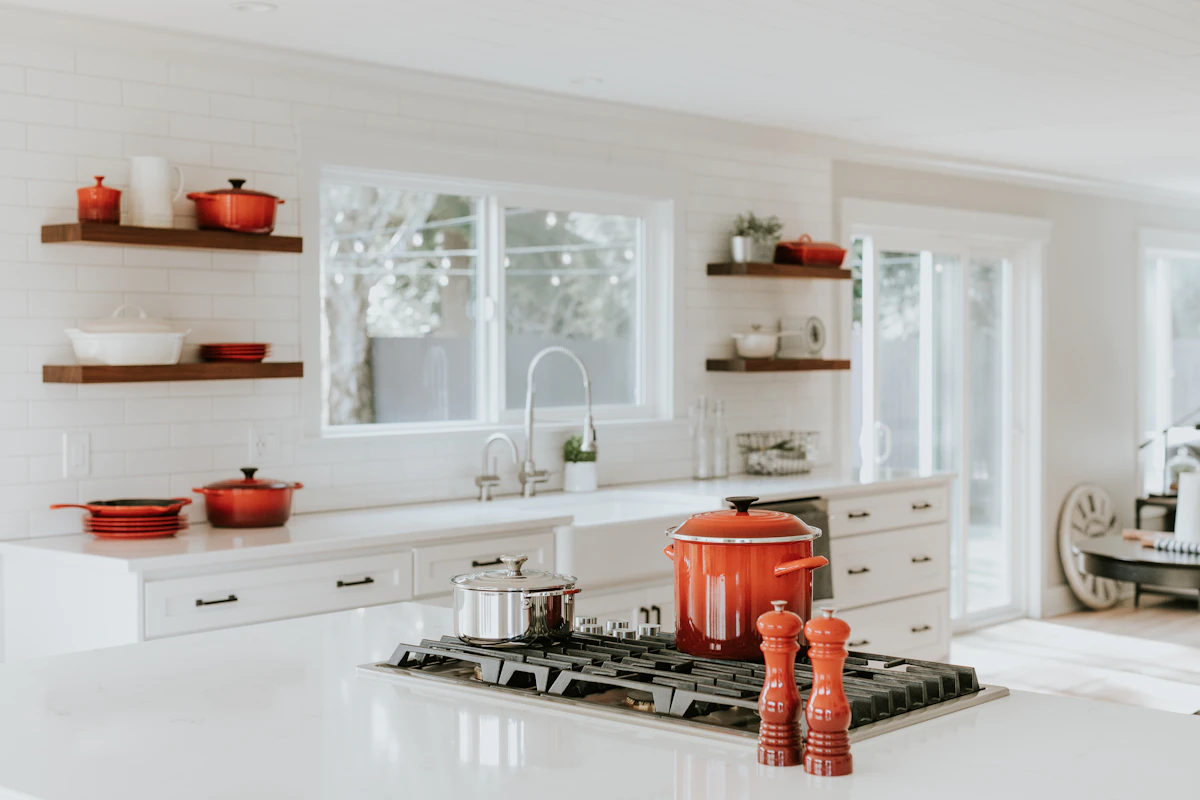
Quick answer: A kitchen needs bright task light on the worktops and softer light for eating. Use under-cabinet LED strips, recessed ceiling lights, and pendant lights over an island, on separate switches, with warm white bulbs around 3000K.
At a glance
- A kitchen needs bright task light on the worktops and softer light for eating. Use under-cabinet LED strips, recessed ceiling lights, and pendant lights over an island, on separate switches, with warm white bulbs around
- Measurements are given in imperial and metric throughout this guide.
- Check the measurements table and the 5 mistakes to avoid before you buy anything.
Kitchen lighting has two jobs that seem to contradict each other. It must be bright enough to chop, read a recipe and check that food is cooked, and soft enough to eat by in the evening. The solution is layers on separate switches, so the kitchen can be bright when you cook and soft when you eat. This guide explains the layers and where they go.
Task lighting for worktops
The most important kitchen light is the one that lights the worktop. Use LED strips under the wall cabinets, so the light falls directly onto the work surface without shadows. If there are no wall cabinets, use a track light or a recessed light positioned in front of the worktop, not behind you, because your body will cast a shadow. Task lighting should be bright and even, with no dark spots, and it should be on a separate switch from the general light. Check the worktop at night, when you actually cook, and look for shadows where you chop and prepare food.
General and ceiling lighting
General kitchen light comes from the ceiling: recessed downlights, a track, or a flush fitting. Space recessed lights evenly, about 90 to 120 cm apart, and position them so they light the worktop and the floor, not just the centre of the room. A single central light is not enough, because it casts shadows when you stand at the worktop. Put the general light on a dimmer so the kitchen can be bright for cooking and softer for eating. In a small kitchen, a bright ceiling light plus under-cabinet strips is usually enough. In a large kitchen, add pendant lights over the island.
Pendant lights over islands and tables
Pendant lights over an island or a dining table add style and focused light. Hang them 75 to 90 cm (30 to 36 inches) above the worktop or table, and space them 60 to 75 cm apart if you use more than one. Choose a shade that directs light downward, and use a warm bulb so the light is soft. A pendant that is too high lights the ceiling instead of the table; a pendant that is too low blocks the view across the table. Use a dimmer so the pendants can be bright for cooking and soft for eating. Keep the pendants in proportion to the island: a long island suits two or three pendants, a small island suits one.
Bulb colour for kitchens
Kitchens suit a slightly cooler bulb than living rooms, because you need to see colours accurately when cooking. Warm white around 3000K is the best compromise: it is bright enough to cook by, but not cold. Avoid cool white around 4000K in a kitchen that is also used for eating, because it can feel clinical. Use the same colour temperature for every bulb in the kitchen so the light is consistent. Look for bulbs with a high colour rendering index, 90 or above, so food and surfaces look their true colour. LED bulbs are the standard now, and they are available in warm white with dimming.
Lighting inside cabinets and drawers
A light inside a dark cabinet or a deep drawer saves time every day. Use a battery-powered LED strip or a small puck light inside a larder cupboard, a corner cabinet, or a drawer that is hard to see into. A light that turns on when the door opens is the most convenient, and it uses very little energy. Add a light above the sink, because the sink is often in a dark corner, and a light inside a glass-fronted cabinet to show off plates and glasses. These small lights cost little, but they make the kitchen much easier to use, especially in the evening.
Lighting a kitchen diner
A kitchen diner needs two lighting schemes in one room. Use bright task lighting in the cooking area and softer, lower light in the dining area, on separate switches. Hang a pendant or a chandelier over the dining table, low enough to create intimacy but high enough to see across the table, usually 75 to 90 cm above the table. Use a dimmer in the dining area so the light can be softened in the evening. Keep the two areas visually connected with the same metal finish or the same bulb colour, so the room feels like one space, not two rooms joined together.
Natural light and windows
Daylight is the best kitchen light, so do not block the window. Use a light blind or a sheer curtain, keep the windowsill clear, and clean the windows regularly. If the sink is under the window, you have the best natural light in the room for washing up. If the kitchen has little natural light, use light walls, a light worktop and a glossy splashback to reflect the available light. Avoid a dark blind or a heavy curtain in a kitchen, because it blocks light and collects grease. A small mirror opposite the window can help in a dark kitchen, but keep it away from the cooker.
Lighting mistakes to avoid
The most common mistakes are relying on one central light, placing lights behind the cook so they cast shadows, using cool white bulbs in a dining kitchen, and having no dimmer. Other mistakes are hanging pendants too high or too low, and having no light inside dark cabinets. Check the kitchen at night, when you cook, and look for shadows on the worktop, dark corners and glare. Fix the task lighting first, because it is the light you use most, and add a dimmer so the kitchen can be softened in the evening.
Key measurements at a glance
These are the standard measurements used by designers for a room like this. They are the same figures used throughout this guide, collected here so you can check them at a glance while you plan.
| What | Measurement |
|---|---|
| Clear floor in front of a worktop | At least 90 cm (36 in) |
| Pendant lights over an island | 75–90 cm (30–36 in) above the worktop |
| Worktop height | 90 cm (36 in) |
| Space between worktop and wall cabinets | 50–60 cm (20–24 in) |
| Paint coverage | About 10 m² per litre (350 sq ft per gallon) |
| Two coats | Standard for an even, durable finish |
5 mistakes to avoid
- Task lighting that puts you in your own shadow over the worktop.
- Matt paint in a kitchen — it marks and cannot be wiped clean.
- Worktops covered with appliances and clutter, leaving no space to cook.
- Pendant lights hung too high or too low over an island.
- Buying storage before decluttering what is never used.
Frequently asked questions
What lighting is best for a kitchen?
Bright task lighting under the cabinets, recessed ceiling lights for general light, and pendant lights over an island, on separate switches. Warm white bulbs around 3000K suit most kitchens.
How high should pendant lights hang over a kitchen island?
75 to 90 cm (30 to 36 inches) above the worktop. Space multiple pendants 60 to 75 cm apart, and use a dimmer so they can be softened in the evening.
What color light is best for a kitchen?
Warm white, around 3000K. It is bright enough to cook by and see colours accurately, but not as cold as cool white around 4000K.
Do I need under-cabinet lighting?
Yes, if you have wall cabinets. Under-cabinet LED strips light the worktop directly, without shadows, and they are the most useful light in the kitchen.
How do I light a kitchen with no windows?
Use bright, even ceiling light, under-cabinet strips, light walls and a glossy splashback to reflect light. Avoid a single central light, which leaves shadows on the worktop.
Note: measurements and spacing guidance in this article are general design guidance for typical homes, in imperial and metric. Check manufacturer instructions and local building regulations for your specific project, especially for electrical, plumbing and structural work.